

Documentation Index
Fetch the complete documentation index at: https://docs.blackbox.ai/llms.txt
Use this file to discover all available pages before exploring further.
Overview
BLACKBOX AI MCP (Model Context Protocol) enables direct interaction with remote agents through the Blackbox CLI in your terminal. This integration allows you to assign tasks, monitor progress, retrieve execution details, and control remote agents effortlessly from the command line. By connecting your CLI to the Blackbox Cloud MCP server, you gain the full power of remote agents without leaving your development environment.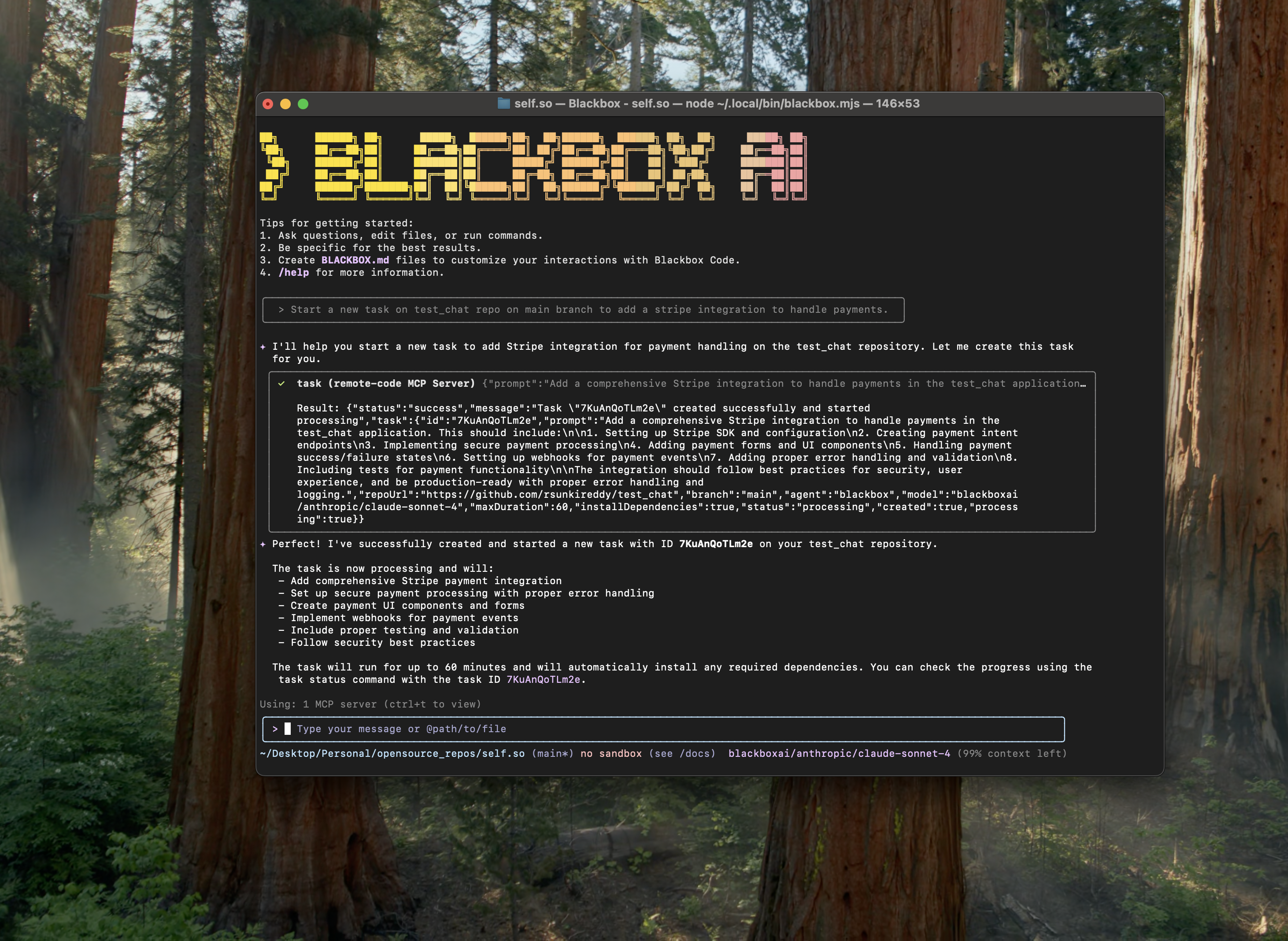
Getting Started
To set up MCP integration with Blackbox Cloud, follow these steps:-
Access MCP Token Section
Navigate to cloud.blackbox.ai, log in, and go to your profile settings. Locate the “MCP Token” section.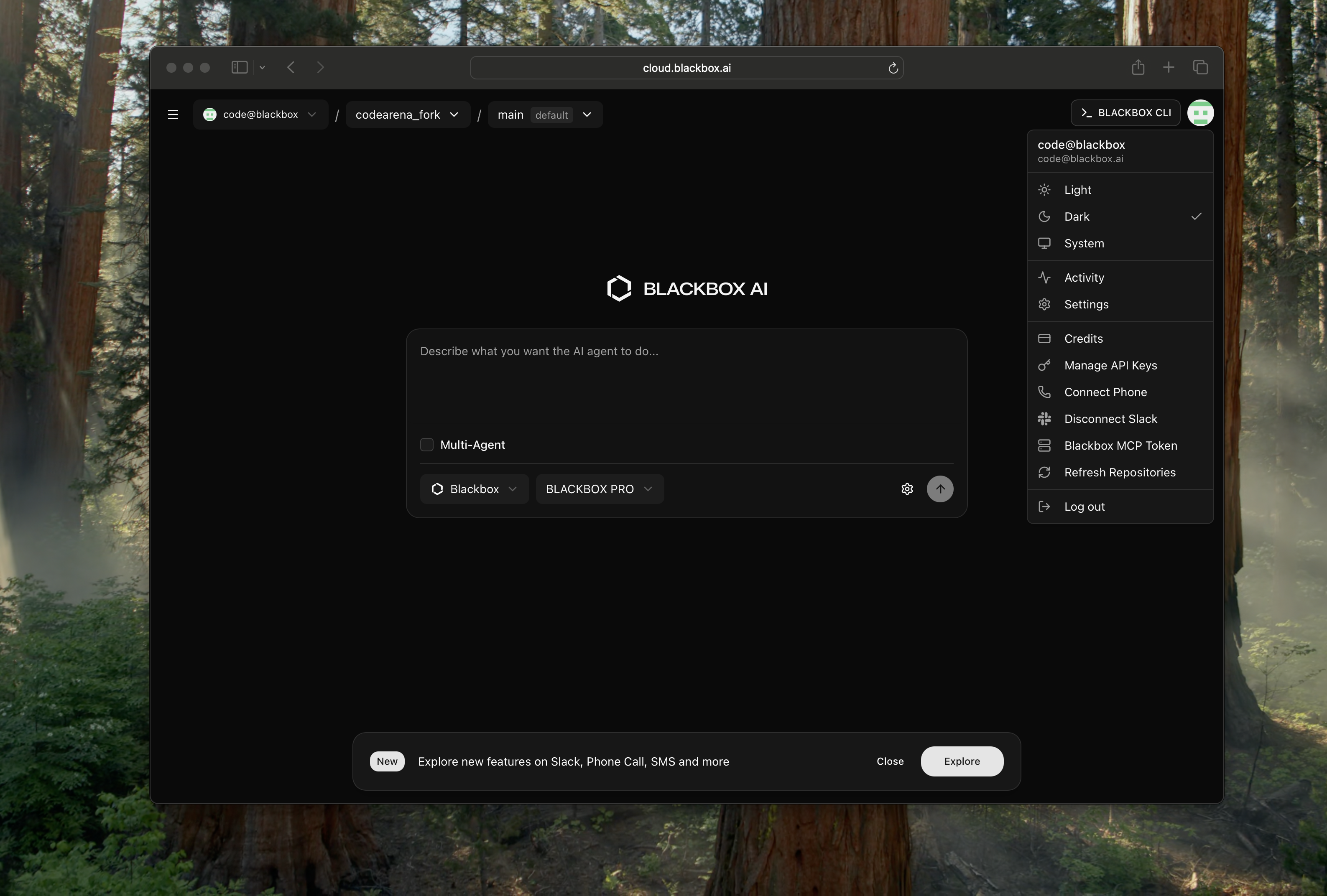
-
Generate or Regenerate Token
Click the generate button to create a new MCP token or regenerate an existing one for security.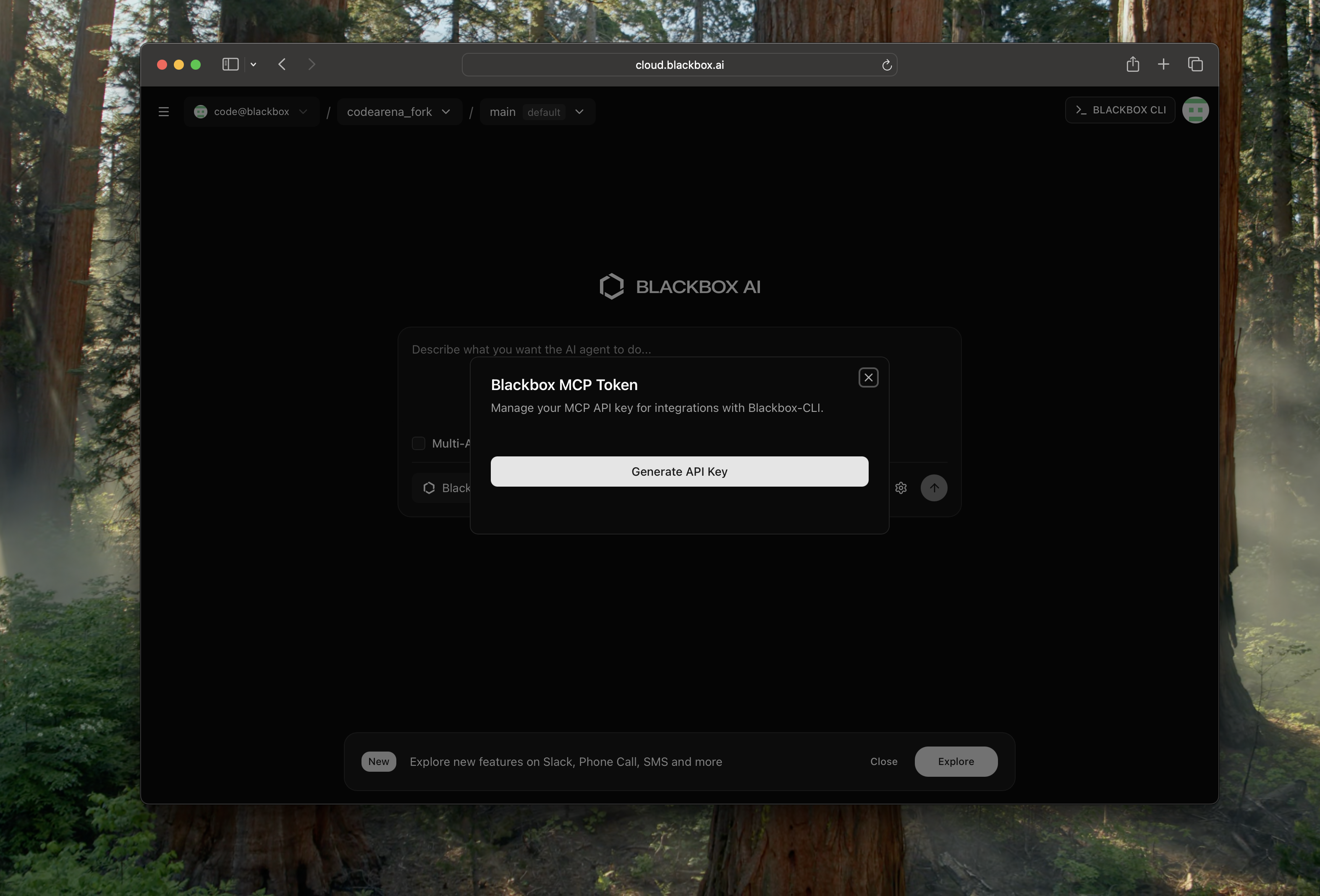
-
Copy the Command
Copy the pre-generated command or use the token in the following format. This command connects your Blackbox CLI to the MCP server.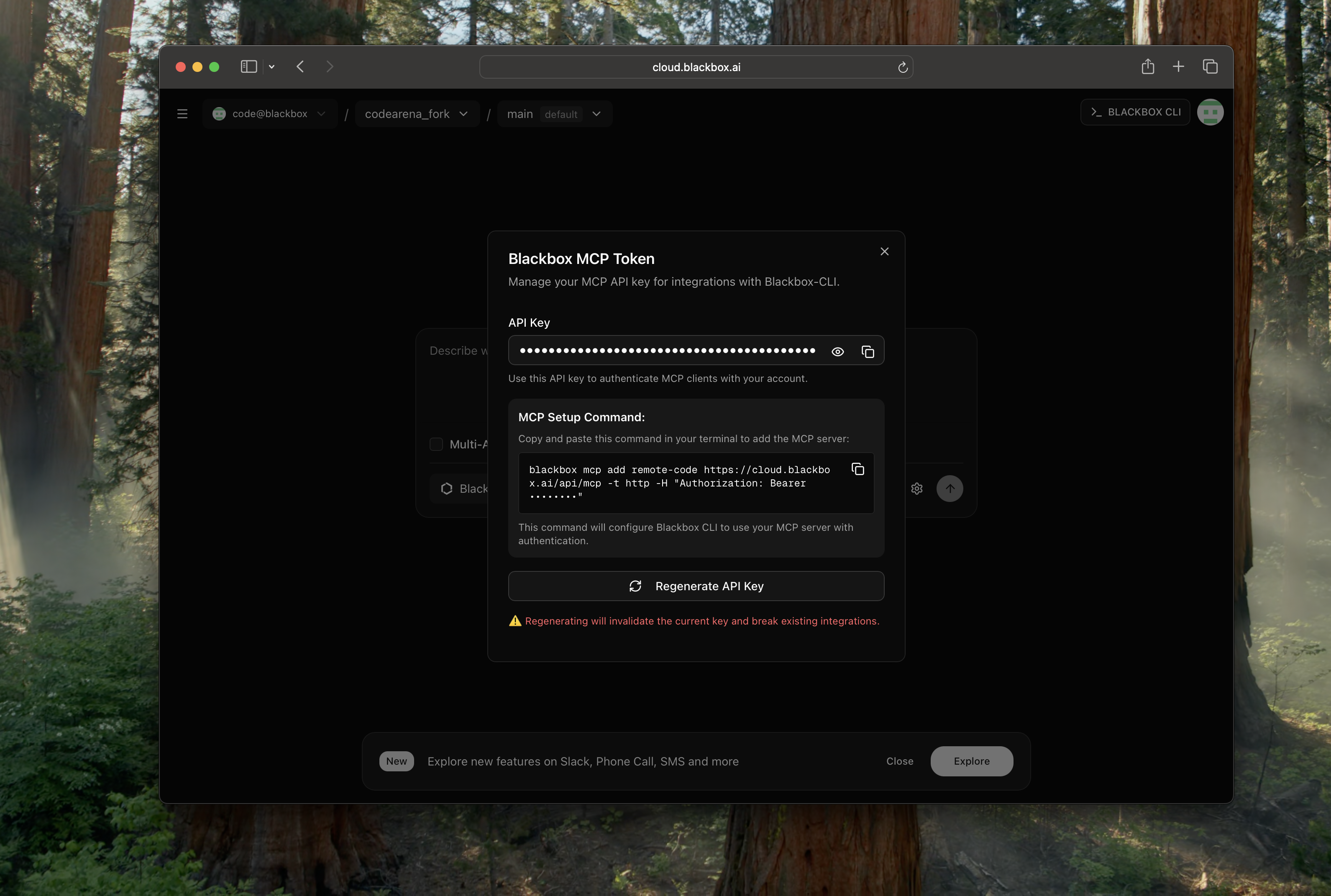
-
Connect MCP Server in Terminal
Open your terminal and run the command you have copied from MCP Setup Command or the following command:Replace<Your_Token_here>with your actual token.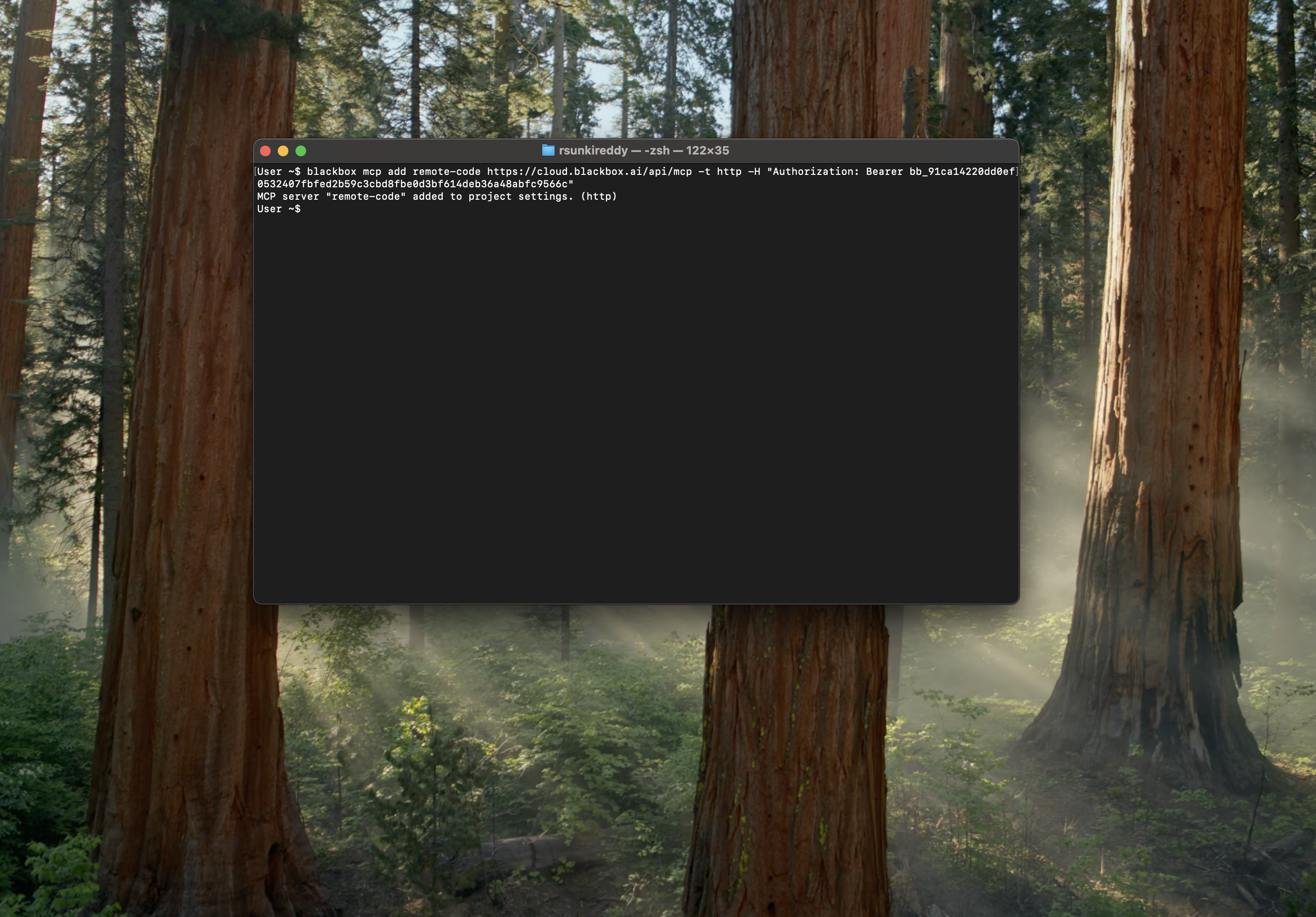
-
Verify Connection
Start a new Blackbox CLI instance by runningblackbox. You should see “using 1:MCP server” in the terminal, indicating a successful connection.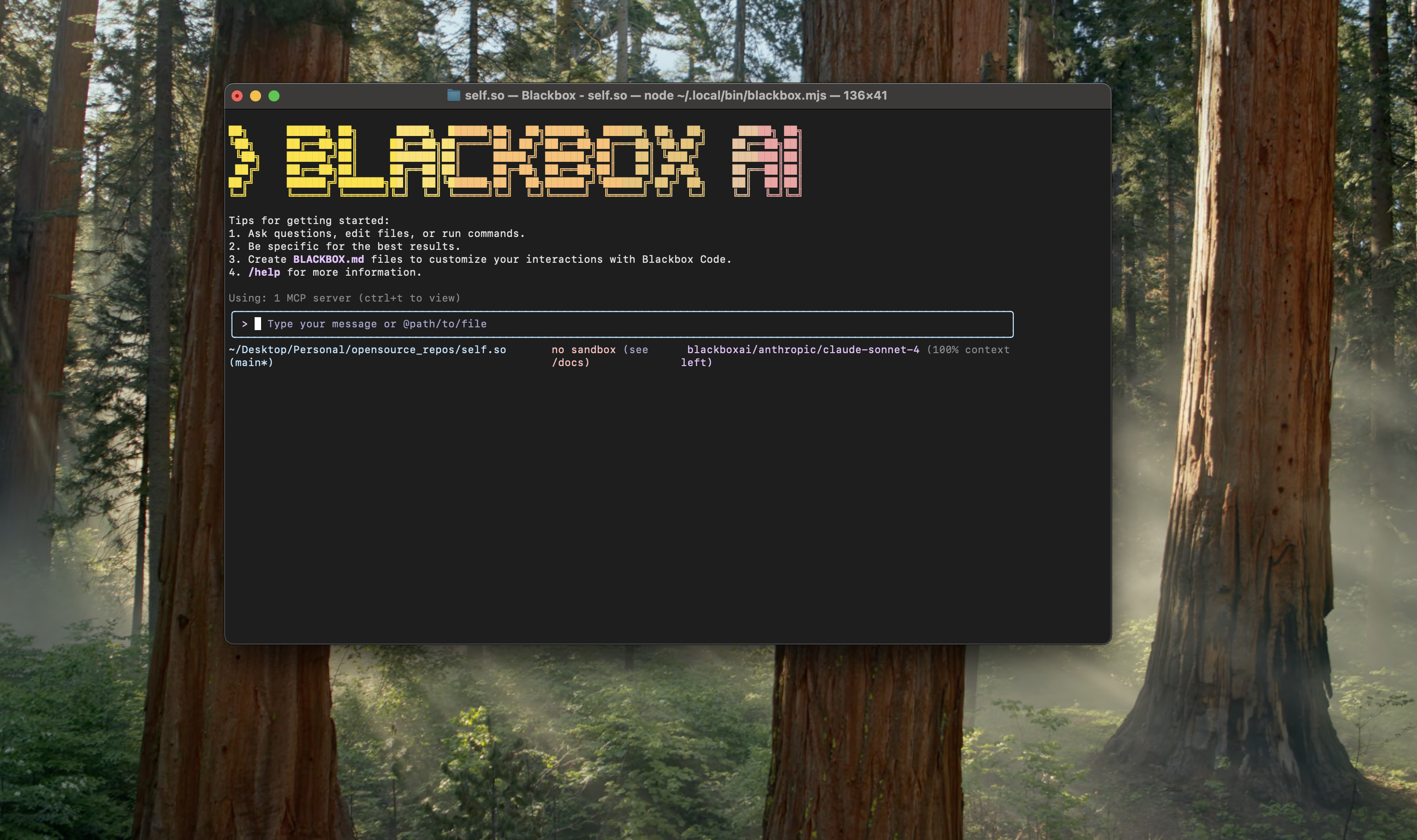
How It Works
Once connected, use tools or issue natural language commands in the Blackbox CLI to control remote agents. The MCP integration supports querying tools, managing tasks, executing operations, and much more seamlessly.-
Explore Available Tools
Use the keyboard shortcut “Ctrl + t” or simply ask the CLI:"print all the remote-code tools"to list all available tools and their capabilities.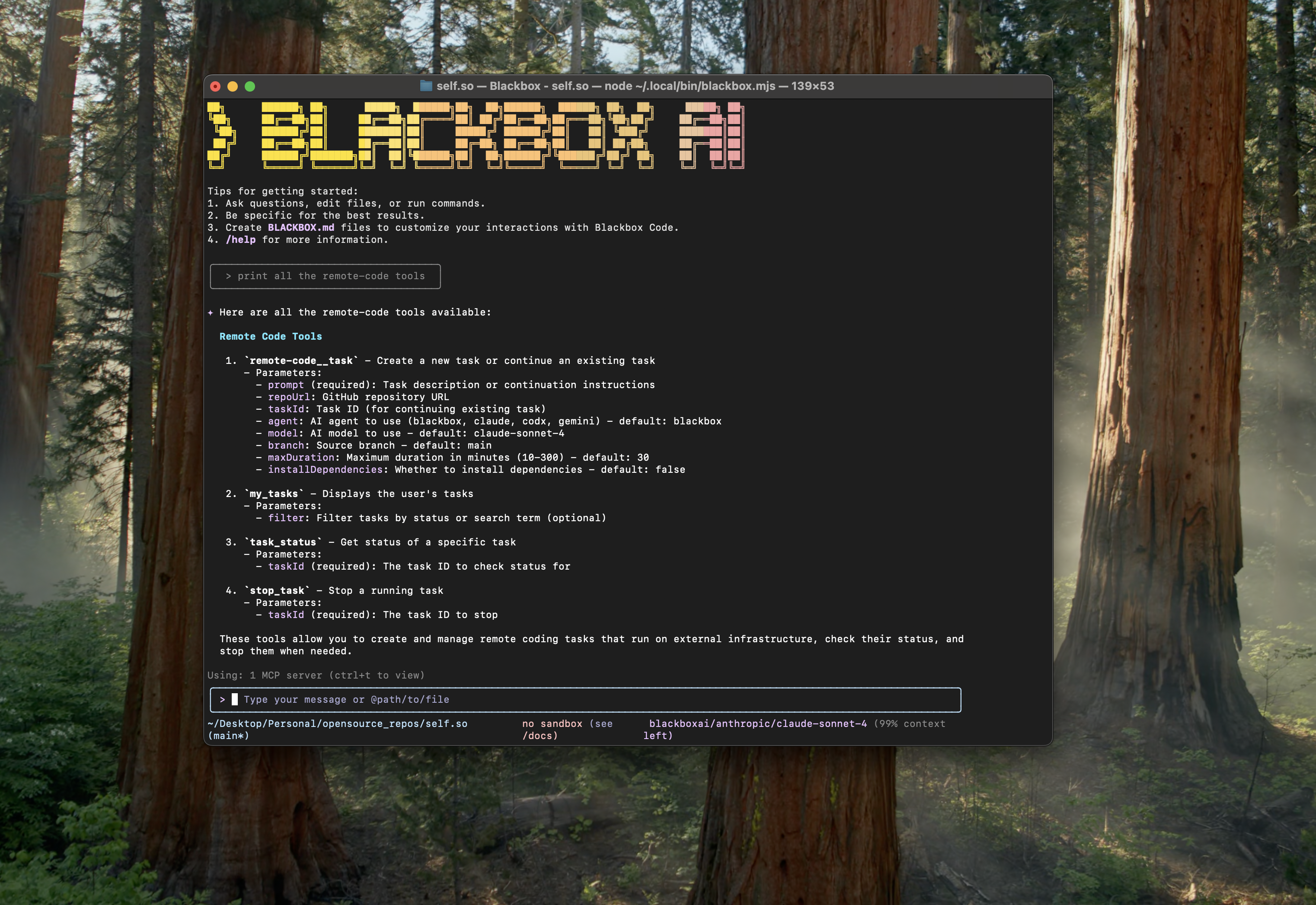
-
View Existing Tasks
Query your tasks by saying:"Get all my tasks"to retrieve a list of current and past tasks.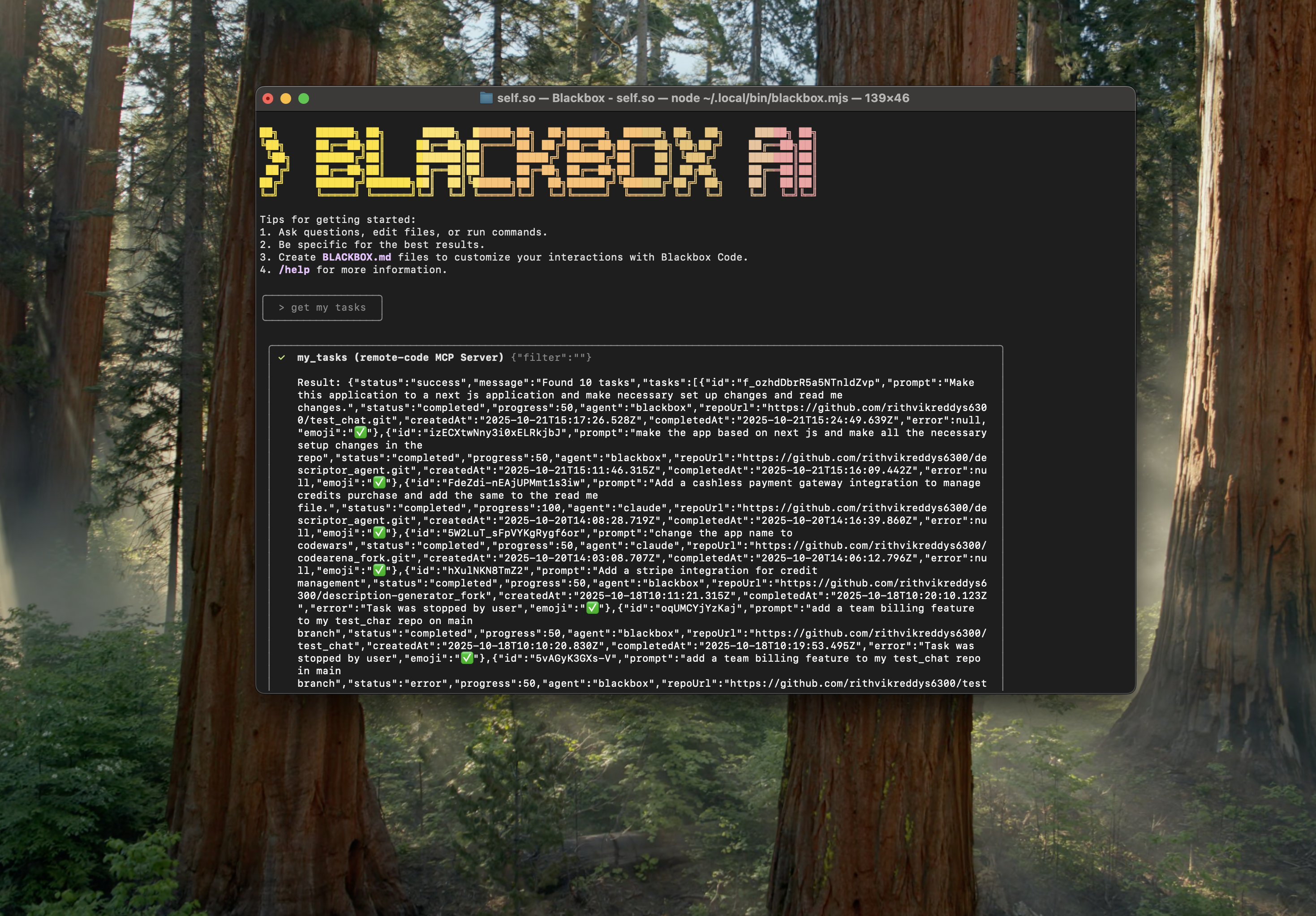
-
Start a New Task
Initiate tasks naturally, e.g.,"Start a new task on test_chat repo on main branch to add a stripe integration to handle payments."Specify the repository and branch in natural language. The task will be created and executed remotely.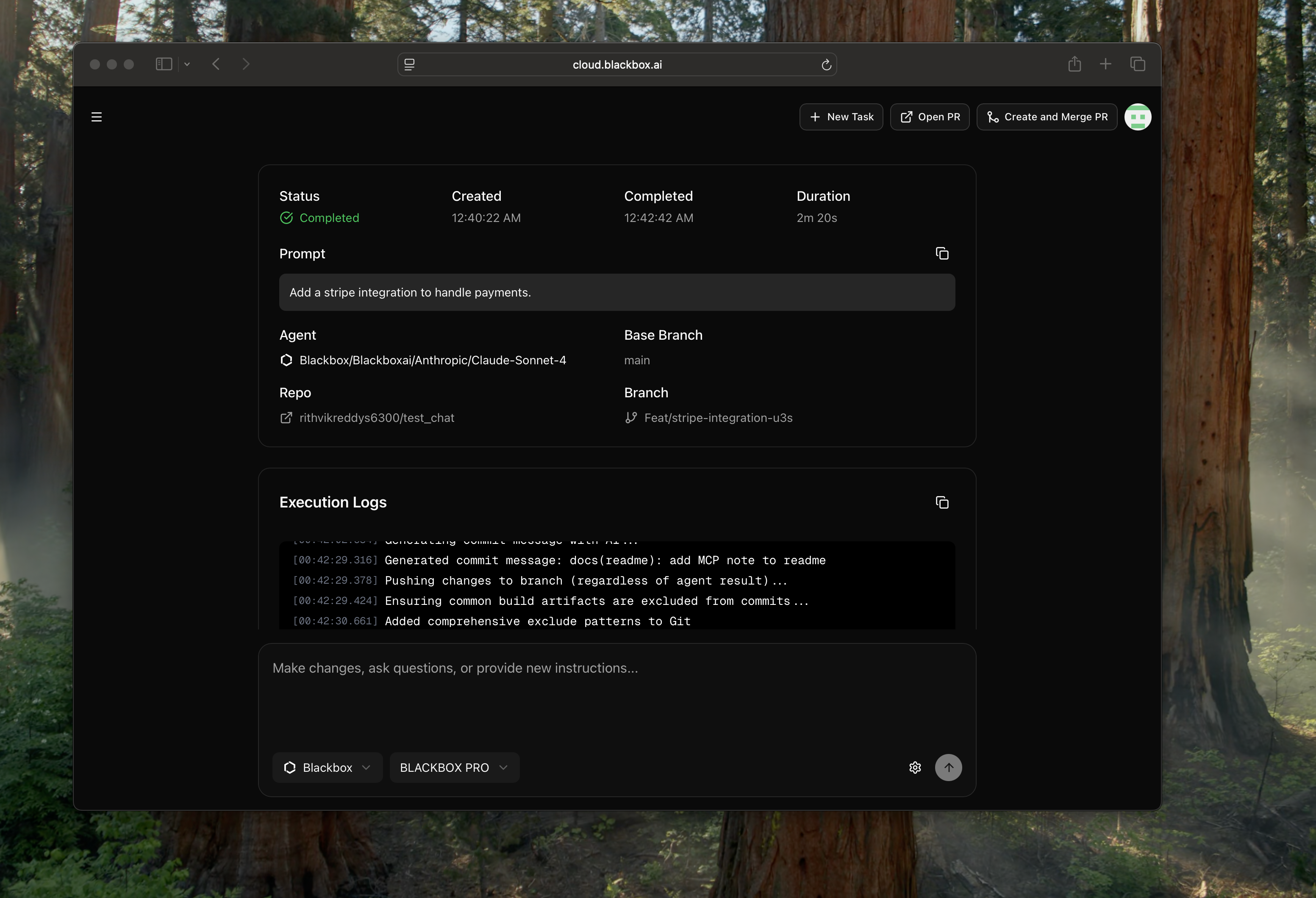
-
Monitor Task Progress
Tasks run autonomously on the remote agent. Check status and details via CLI queries or view them in the Blackbox Cloud UI.
Using /remote Commands
The/remote command provides a streamlined way to execute tasks on your GitHub repositories directly from the Blackbox CLI. This slash command syntax offers a quick alternative to natural language task creation.
Command Syntax
<task-description>: Description of the task you want to execute<repo-specification>(optional): Repository identifier (see formats below). If omitted and you’re inside a Git repository, the current repository is automatically used--branch <branch-name>(optional): Specify an existing branch or create a new one. If omitted and you’re inside a Git repository, the current branch is automatically used as the base branch
Automatic Git Context Detection
When you run the/remote command from within a Git repository, Blackbox CLI automatically detects and uses your current repository context. This provides a seamless experience for working on local repositories.
How It Works:
- Automatic Repository Detection: If you’re inside a Git repository and don’t specify a repository,
/remoteautomatically uses the current repository - Automatic Branch Detection: If you don’t specify a
--branch, the current branch you’re on becomes the base branch for the pull request - Explicit Override: You can always explicitly specify a different repository or branch to override the automatic detection
- Use the current repository (my-project)
- Create a new
blackboxai/branch - Raise a PR to
develop(your current branch)
- Use the current repository
- Create a new
blackboxai/branch - Raise a PR to
main(specified branch, not your current branch)
- Use
username/other-repo(explicitly specified) - Ignore the current repository context
- Create a new
blackboxai/branch - Raise a PR to
mainbranch ofusername/other-repo
/remote without specifying a repository and you’re NOT inside a Git repository, the task will execute in a sandbox environment without GitHub integration:
- Execute the task in a sandbox environment
- No GitHub repository will be used
- No pull request will be created
- The agent will work on the task and provide results directly
- Quick prototyping and testing
- Creating standalone scripts or utilities
- Experimenting with code without repository setup
- Learning and exploration tasks
- Faster Workflow: No need to type repository names when working on your current project
- Context-Aware: Automatically uses your current branch as the base branch
- Flexible: Can still specify different repositories or branches when needed
- Seamless Integration: Works naturally with your local development workflow
- Sandbox Fallback: Works even without a Git repository for quick tasks and prototyping
Repository Specification Formats
When you need to specify a repository explicitly (or when not inside a Git repository), you can use these formats:-
Username/Repository Format:
This format works for:
- Your own repositories
- Open-source repositories
- Public repositories
- Any GitHub repository you have access to Examples:
-
Full Repository URL (using
--repo-url): -
Natural Language (repository mentioned in task description):
Branch Behavior
The--branch parameter specifies the base branch for your pull request, not the working branch name:
- With
--branchspecified:- A new branch is automatically created with the prefix
blackboxai/ - The agent works on this new branch
- A pull request is raised to the base branch you specified
- Important: The base branch must be accessible/exist in the repository, otherwise the task will fail
- A new branch is automatically created with the prefix
- Without
--branchspecified:- A new branch is automatically created with the prefix
blackboxai/ - The agent works on this new branch
- A pull request is raised to the default branch (usually
mainormaster)
- A new branch is automatically created with the prefix
- Create a new branch like
blackboxai/add-feature-xyz - Make changes on that new branch
- Raise a PR from
blackboxai/add-feature-xyz→develop(base branch)
--branch parameter to use the default branch instead.
Usage Examples
Working Inside a Git Repository (Automatic Context):Alternative Syntax
You can also specify the branch inline without the--branch flag:
main branch if it exists, or create a new branch if it doesn’t.
Workflow
- Execute Command: Type the
/remotecommand with your task description and repository - Branch Creation: If needed, a new branch is automatically created
- Task Execution: The remote agent processes your task autonomously on Blackbox Cloud
- Monitor Progress: Track execution in real-time via:
- CLI queries and status updates
- cloud.blackbox.ai - View detailed task execution logs
- Review Changes: Check the pull request created by the agent on:
- Your GitHub repository
- cloud.blackbox.ai - View all PRs and task results
Monitoring Tasks on Blackbox Cloud
After executing a/remote command, you can monitor and manage your tasks in multiple ways:
Via Blackbox Cloud Web Interface
Visit cloud.blackbox.ai to access:- Task Dashboard: View all your running and completed tasks
- Execution Logs: See detailed logs of what the agent is doing in real-time
- Pull Requests: Review all PRs created by the agent
- Task Status: Check progress, errors, and completion status
- Task History: Access previous tasks and their outcomes
Via Blackbox CLI
You can also check task status directly in the CLI using the task ID: Get Task Status:- Current execution status
- Progress updates
- Any errors or issues
- Completion status
- Link to the pull request (if completed)
Tips
- Work Locally: When inside a Git repository, simply run
/remote <task>without specifying the repository - it will automatically use your current repo and branch - Sandbox Mode: When NOT inside a Git repository and no repo is specified, the task executes in a sandbox environment without GitHub integration - perfect for quick prototyping
- Override When Needed: Explicitly specify a repository or branch to override automatic detection
- Current Branch as Base: When working locally without specifying
--branch, your current branch becomes the base branch for the PR - Repository Access: Ensure you have proper access to the repository before executing tasks
- Task Descriptions: Use descriptive task descriptions for better agent understanding
- Base Branch Selection: The
--branchparameter sets the target/base branch for the PR, not the working branch. The agent always creates a newblackboxai/branch to work on - Branch Accessibility: Only specify
--branchif that branch exists and is accessible. If unsure, omit it to use the current branch (when in a Git repo) or default branch - Auto-Branch Creation: The system always auto-creates a new working branch with the
blackboxai/prefix when working with GitHub repositories - Works with Any Repository: The username/repo format works for your own repositories, open-source projects, and any public GitHub repository you have access to
- Track Task Status: Use the task ID to check status directly in the CLI by asking “What’s the status of task [task-id]?”
- Monitor on Cloud: Visit cloud.blackbox.ai to view task execution logs, status updates, and pull requests in real-time
Key Features
- Terminal-Based Control: Manage remote agents without switching to a browser.
- Natural Language Commands: Issue tasks and queries conversationally.
- Real-Time Monitoring: Get live updates on task status and execution details.
- Seamless Integration: Connects directly to Blackbox Cloud for authenticated access.
- Tool Discovery: Dynamically list and utilize available remote tools.
- Task Orchestration: Enable the CLI agent to create or manage remote task(s), orchestrating them to achieve final goals through different tools available.
Benefits
- Terminal-Centric Workflow: Manage remote agents directly from your CLI without switching to a browser, streamlining development for command-line users.
- Natural Language Interaction: Issue complex tasks and queries using conversational commands, reducing the need for precise syntax or manual inputs.
- Real-Time Task Oversight: Monitor agent progress and execution details live in your terminal, enabling quick interventions and status checks.
- Dynamic Tool Utilization: Automatically discover and leverage available remote tools, expanding your CLI’s capabilities without additional setup.
- Agent Orchestration: Enable the CLI agent to manage and coordinate multiple remote agents, automating task delegation, parallel execution, and sub-task orchestration to achieve complex goals.
- Context Sharing: Seamlessly share remote agent task details with the CLI, enabling local improvements or continued development without context loss.
Use Cases
- Complex Feature Development: Build full-stack features autonomously via CLI commands, delegating code generation, testing, and integration to remote agents.
- Parallel Bug Fixes: Orchestrate simultaneous fixes across multiple repositories, executing and merging changes without manual intervention.
- Automated Code Reviews: Extend CLI capabilities with AI-powered reviews and merges on pull requests, enhancing git workflows.
- Real-Time Task Monitoring: Track and adjust remote agent progress in real-time, issuing follow-up commands for iterative development.
- Scalable Project Management: Coordinate subtasks across branches for large-scale refactoring or optimizations using orchestrated remote agents.
Next Steps
Explore related Blackbox Cloud features to expand your remote development capabilities:Blackbox Cloud
Learn about the full remote agent platform.
Blackbox CLI
Dive deeper into terminal-native development.
Multi-Agent Execution
Run multiple agents in parallel.
Slack Integration
Manage tasks via Slack.